


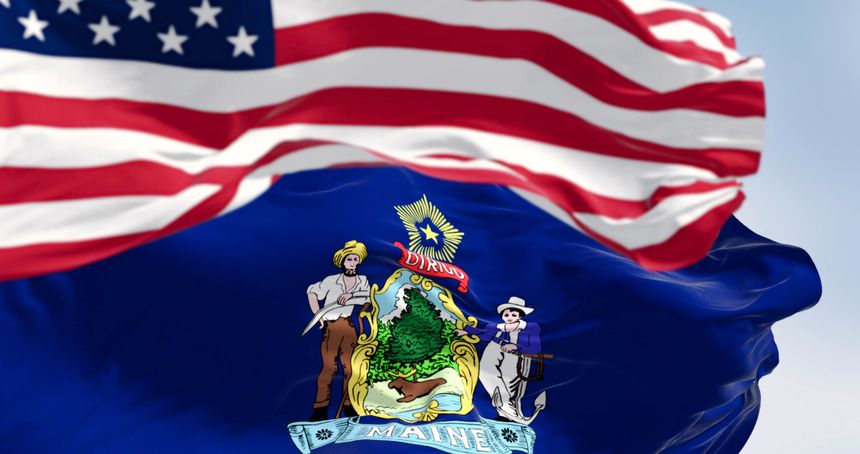

On August 26, 2025, the Maine Supreme Judicial Court unanimously affirmed in Maine State Chamber of Commerce et al. v. Department of Labor et al. the legality and constitutionality of the state Paid Family and Medical Leave ("PFML") Act (the “Act”) rules adopted by the Maine Department of Labor ("MDOL").
In 2023, Maine enacted the Act, and on December 4, 2024, the MDOL issued rules implementing the Act. Beginning January 1, 2025, employers were required to start remitting quarterly premiums into a Maine-run fund for the PFML program. As of May 1, 2026, covered individuals can take up to 12 weeks of paid leave for reasons including: care for a family member with a serious health condition; bonding with a child after birth, fostering or adoption; their own medical needs; managing a family member’s impending military deployment; or for reasons related to instances of abuse or violence. Under the Act and the MDOL's rules, employers that offer optional private plans that provide substantially equivalent coverage are exempt from paying contributions to the PFML program (i.e., a private plan substitution). The latest information regarding the PFML program can be found here.
At issue in the case were the MDOL's rules related to premiums and private plan substitutions. Specifically, the MDOL's rules delayed an employer's ability to apply for approval of a private plan until after April 1, 2025. The MDOL argued that this delay was required because it would take insurance companies 3 to 4 months after the final rules were issued to write satisfactory private policies. Once a private plan is approved, exemptions would begin on the first day of the quarter that the private plan was approved. All premiums owed prior to the effective date of the exemption remain due and non-refundable.
Plaintiffs, the Maine State Chamber of Commerce and Bath Iron Works, argued that the MDOL’s rules conflicted with the Act. In addition, they stated that the exemption delay constituted a “taking” of private property for public use under the Maine and U.S. Constitutions because employers were required to make payments before they could apply for a private plan substitution. Ultimately, the court disagreed and found that the MDOL's rules reasonably implemented the Act and that nothing in the statute contemplates refunds for employers that eventually obtain an exemption. The court also found that: (1) a taking cannot occur when a “property owner voluntarily participates in a regulated program” (e.g., the PFML private plan option); and (2) there was “no identifiable property right or interest at stake that could form the basis of a takings claim.”
PFML benefits in Delaware, Maryland, and Minnesota also become available in 2026. Stay tuned for more information about PFML requirements in those states.
/Passle/687957ea093e1f067f31b682/SearchServiceImages/2026-09-23-13-58-43-153-6ab3db130a49f0895341ff52.jpg)
/Passle/687957ea093e1f067f31b682/SearchServiceImages/2026-09-21-19-38-35-750-6ab187bbec22d9313bf6d33c.jpg)
/Passle/687957ea093e1f067f31b682/SearchServiceImages/2026-09-10-16-37-32-702-6aa2dccca166fca0660b7ce3.jpg)